
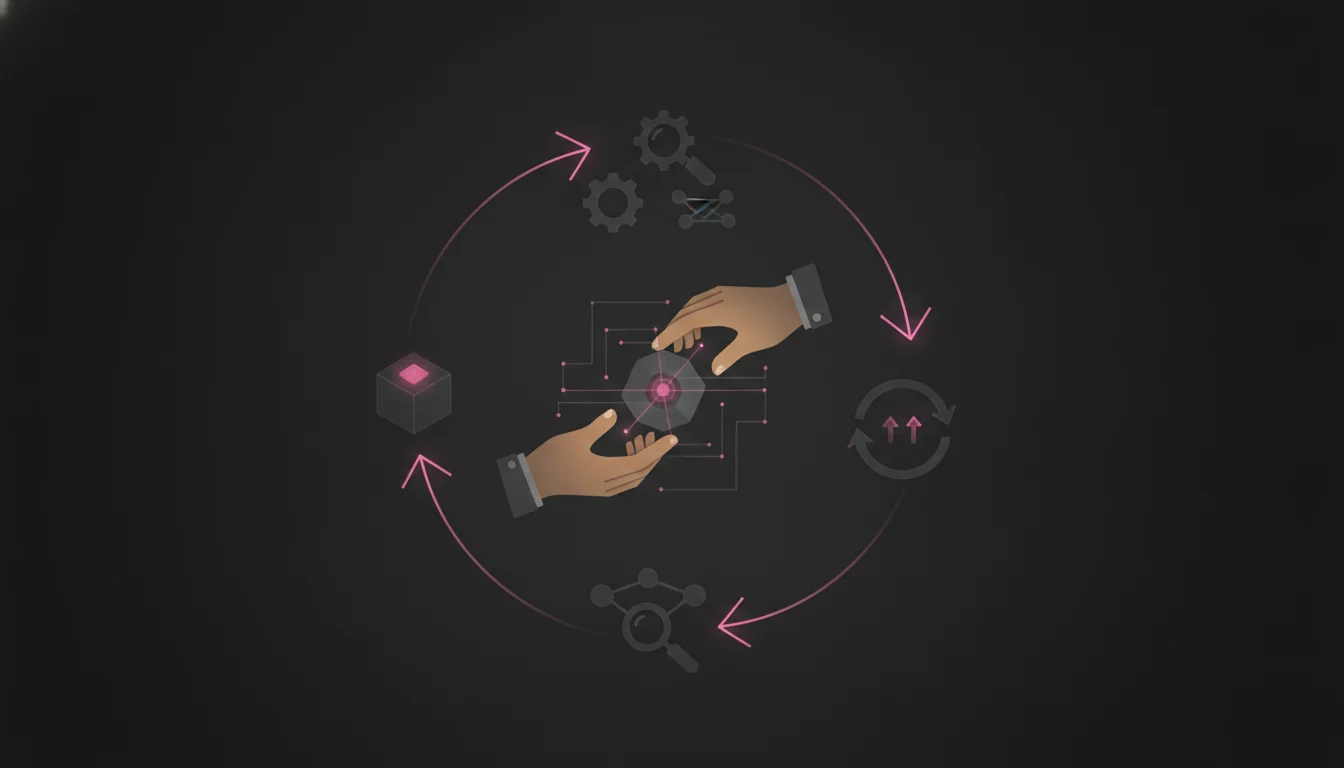
The most effective AI training is not a theory course: it is making people use the tool on a real problem, with immediate feedback. Generic webinars create awareness. They rarely create adoption.
Why most training does not change habits
Many companies run:
- a one-hour webinar on “what AI is”;
- a few slides on risks;
- an invitation to “try ChatGPT”.
Then people go back to usual work. Or they use personal tools in an ungoverned way (Shadow AI).
Istat 2025 confirms that lack of skills is among the main barriers to adoption. But “skills” does not only mean knowing what an LLM is: it means knowing how to use it in your own process with judgment and responsibility.

A low-cost model that works
- Choose a real use case for the team (not an invented example).
- Run a short hands-on session (60–90 minutes) on that case.
- Assign a concrete task to do in the following days with the tool.
- Collect feedback and mistakes in a second short session.
- Consolidate with simple rules and an internal reference point (champion).
This cycle costs little, produces learning, and increases adoption.
What to teach (and what not to teach at the start)
Teach immediately:
- how to formulate clear requests about your own work;
- how to verify answers (sources, coherence, limits);
- when not to use AI;
- company data and privacy rules.
Postpone:
- model architecture details;
- technical comparisons between providers;
- advanced prompt engineering theory.
People do not need to become AI engineers. They need to become aware, responsible users on their own work.
The role of the internal champion
Every team or area should have at least one person who:
- knows the tool well on the use case;
- collects questions and problems;
- bridges to IT / security / partners.
You do not need a new title. You need someone recognized and supported.
Simple success metrics for training
- % of people who use the tool at least X times a week on real work;
- reduction of questions like “where do I find…” or “how do I…”;
- perceived quality and output correction rate;
- reduction of unauthorized uses (if monitored).
If after training usage does not change, training did not work—regardless of hot feedback scores.
FAQ
How long before you see results?
On a small team and a clear use case, the first habit changes show in 2–4 weeks.
Do you need a large training budget?
No. Short, targeted, repeated sessions cost less and produce more than long generic courses.
What about people who resist?
Involve them on the problem they feel (wasted time, errors, frustration) and show a concrete result on their work—not on technology in the abstract.
Does training reduce Shadow AI?
Yes, if paired with a usable company tool and clear rules. Training + a good alternative works better than a ban alone.
Sources
- Istat Enterprises and ICT 2025: skills as an adoption barrier.
- Change management practice and digital tool adoption in SMEs.
- Evidence on hands-on learning vs theory-only training.
Dig deeper in the series
- AI literacy and AI Act mandatory training
- AI and work: how tasks, roles, and skills change
- Data security and Shadow AI
- Where to start with AI in the company
If you want to design an AI literacy path targeted to a team and a concrete use case, we can build it together in a light, measurable way. Write to info@zendata.it or visit zendata.it.
Pietro Ciattaglia, CEO of Zendata AI, Rome